Career "polygamy" and the future of public health with Shelley Brown




Episode summary
In this kickoff to our January special series, Jessica Atkinson and David Torres sit down with the "illustrious" Shelley Brown. Shelley isn't just a dental educator; she is a pioneer in the public health space who has mastered the art of "career polygamy."
This episode dives deep into the transition from traditional clinical practice to independent mobile dentistry. Shelley shares the catalyst behind her business, Homebound Smiles, and provides a transparent look at the logistical steps required to start a business—from choosing a name to securing an EIN. If you’ve ever felt your professional "verve" fading in the operatory, this conversation will help you envision a future where dental hygienists operate with the independence of physical therapists.
Key takeaways
-
The power of "yes": How saying yes to "extra" opportunities can fundamentally shift your professional identity.
-
The business checklist: Shelley breaks down the intimidating "hundred steps" of starting a business into manageable first moves.
-
Reclaiming creativity: Why mobile dentistry allows for more robust preventive programs than traditional office settings.
-
Preventing burnout: How diversifying your career through side projects can act as a shield against clinical fatigue.
-
The 20-year vision: A look at the future of dental hygiene as an independent, preventive-focused profession.
Notable quotes
- "I want to go down in history creating awareness about public health and the dental hygiene profession." — Shelley Brown
- "Some offices do offer that autonomy, and that's amazing... but this has allowed me a way to be creative and flexible in the way that I need." — Shelley Brown
- "We are currently just patching holes and hoping for the best. If we set the dental hygienist free, we do a lot more prevention for our population." — Shelley Brown
Resources and links
-
Shelley Brown’s website: Shelley.dental (Free "How to Start a Business" handout available here)
-
YouTube channel: Shelley the Hygienist
-
Professional organization: American Mobile Dental and Industry Alliance (AMDIA)
Episode Transcript
Jessica Atkinson
Welcome back to A Tale of Two Hygienists. I am Jessica Atkinson and this is episode 520. I'm here with my illustrious co-host, David Torres.
David Torres
Hi everyone again. Welcome to the month of January. We're hosting a special series featuring dental hygienists who started side projects, businesses, and creative paths built alongside clinical practices. We're talking about how they started, what they learned, and how saying yes to something extra changed the way they see their careers.
Jessica Atkinson
So today we have brought on the one, the only, Shelley Brown. Because if there's anyone in this world that has given me opportunities to say yes to something—something extra, like in the best ways the word "extra" can be used—that has changed the way I've seen our profession, my career, and myself.
And I'm not going to keep going, otherwise I will get emotional. But it is Shelley Brown. Welcome, Shelley. We are happy to have you here.
Shelley Brown
Thanks, Jess. I'm—I'm happy to be here. I love—I love supporting what you're doing. I'm so excited to be here today. Thank you.
Defining the career path
Jessica Atkinson
We're going to be talking about your extracurricular activities and activities. I'm—I'm kind of struggling with what to call these things. So we're just going to start with the story of Shelley.
And to give a little background—I mean, I could read a bio of Shelley and it would take up all of our 20 minutes because she's that great. But I first want to know, Shelley, of all the bios, what is something that you want to be known for in the dental hygiene space of your life? Like if everyone were to scrap your bio read, what would you want them to say instead?
Shelley Brown
That's a great question. There's—there's a dental hygienist that is... well, in 2025, I think was my year of public health, and I didn't think that I would ever be, like, a public health advocate or like that type of stuff. I was like, "That's lame, and that's not cool."
But I realized, like, I really love public health and that means autonomy for dental hygienists, that means expanded scope. That means, you know, different settings of practice and—and advocating for that on social media. So I would say, you know, I want to go down in history creating awareness about the public health and dental hygiene profession.
Jessica Atkinson
I love that. You are going to go down in history. I can feel it.
So, Shelley and I dressed up as Irene Newman and Esther Wilkins at a recent continuing education event for our association in the state of Utah. And I think in 100 years, Shelley, somebody is going to be dressing up as Shelley Brown. I feel it.
Shelley Brown
That's a lot of—that's a lot of work on my end.
Jessica Atkinson
I feel it. But with the public health, Shelley has started a number of side—I want to say side additions. Like, I don't feel like they're—and I don't think "hustle" really—really encapsulates what you do. I read this morning, here's the term: it's called—I'm ready—"career polygamy."
David Torres
I was like, "Career polygamy?" That's weird. Okay.
Jessica Atkinson
I like—Shelley is a career polygamist and, just kidding. Let's talk side gigs.
Shelley was one of my educators, and she has always been doing things like this. When I was her student, she was talking about writing a book. And then when I was her colleague, she started a business online educating other dental professionals with me. I was so grateful to be part of—of that endeavor.
And because you would like to go down in history in the public health arena, there's one side gig I'd like to focus on today with you, Shelley. And can you tell us how your business of Homebound Smiles came about? Because I know you want to be in that public health space and advocate, but you're not just words on a screen. You actually do it in real life.
And to that, Shelley, I'm also curious: did that come out of, like, burnout, passion, necessity? Or you were just like, "I got this, I'm just going to wake up tomorrow and get it going"?
Staying relevant and clinical
Shelley Brown
Well, I think I wanted to stay relevant initially. So as a teacher—I've worked there since 2009 with students and things—I wanted to stay relevant. So I always had, like, two days of clinic. And then every child that I have—I have four little boys—I would cut down a day and then cut down another day.
And that was like one Saturday a month, which is like terrible because I was missing sports games. So it was like, how do I stay clinically relevant but be able to share experience, but like set my own hours and work when I would like to?
And so in Utah it passed around that time, probably ten years ago now, Jess—when you think about that—the hygienist could see patients in public health settings with a collaborative dentist at the time. And I was always kind of interested. We had a few people starting that, doing something like that, and I was like, "Hey, that looks kind of interesting. A way to set my own schedule, see patients—like, how cool would that be?"
The catalyst that really started it—I initially got the business license and things like that started going because there's a lot of steps—in 2020, and then like Covid hit and then I had a baby, so I didn't do anything with it for like a year and a half, even though I had the business open, which you can—you can do. You can have the name and the license and all the things.
The catalyst was one of my colleagues in Saint George, Utah, Danielle Ovens. She said, "Shelley, I have a patient who is in a nursing home. She's a dental hygienist with Alzheimer's, and she needs to see somebody up there and nobody else is doing it. And you're interested and I need you to do it."
So I had this amazing mentor who kind of pushed me to seeing my first patient, you know, because, like, where do you find patients at? That's a whole other world, a whole other issue. So she was like—ended up being my first patient, this amazing dental hygienist who loves to talk dentistry when I'm with her, but I'm hers. And so that's initially how it started.
Balancing family and business
Jessica Atkinson
Wonderful. I'm so curious, cause you mentioned a couple things that I'm like, okay, we have four boys.
David Torres
I personally have three boys, and it's like—it's a lot, you guys. I have to know, like, are they like your personal assistants or how does that work? How do you balance it all?
How is it that you manage to be who you are without—it seems like nowadays we're all feeling a little burned out—but being able to kind of have that as a resilience and say, "Yeah, like I have my home life, I have this going on and my side hustles or gigs"? I'm so curious. Like, is there a mental fatigue that you were going through some days, or is it just cutting back? And how much is too much and how much is not enough?
Shelley Brown
There's a lot of questions in there, David. See, I'm so curious what you're dressed up—yeah, I know. I think what you're trying to ask is how—I mean, how do you balance all the things? Because, you know, I'm a teacher, I run two businesses. You know, like, that's a lot, right?
Jessica Atkinson
And I have decided that Shelley has more hours in a day than most people. That's—that's what I personally decided: that Shelley just—she knows how to take a minute and squeeze an hour out of it.
Shelley Brown
Yeah, like, that's what I'm always trying to do. So I'm on, or I have to get up really early before the kiddos. I go to bed at like 9:00, though. We're all tired. So I gotta get up early, get things done, get the kiddos up and going.
After a couple hours, you know, get them ready, give them all their kisses and hugs, let them know I'm here, I love them, and then they head off to school. So they're all school-age at this time. When they were not, I had a daycare. I had childcare; I had really great childcare. I think that that is important for parents, that you have somebody that you can lean on childcare-wise. I've had a couple great—two great babysitters.
So that's made a big difference for me to be able to get things done. Because if you have a toddler running around, like, it's impossible. It's impossible to get anything done. You're in and out of, like, consciousness is what I call it. You're working, you're with child. So, finding good support systems and just, you know, when you're home, you're home.
But there are some times where I have to be like, "Mom has to go work for, like, 30 minutes and get a few things done while you guys hang out." So, you know, there's that balance and it's definitely overwhelming. But I like to write everything down on the list that I have to do. Like, if an email comes through, I'll put it on my list and then just throughout the day, when I have a second, I look at that and say, "Is this a one-minute thing I can get done, or do I need ten minutes?"
What slot do I need to fit that into? What day do I need to put that into? And so, just—yeah—staying organized, setting tasks on your calendar, make a big difference.
Jessica Atkinson
I will say something that I've learned from you, that—working with you—is meetings with Shelley are not just meetings to figure out what you need to do later. When I meet with Shelley, we're always looking at what can be done right now. What can be crossed off the list is—is something that we can get done instead of just talk about.
Shelley Brown
Working meetings. I like—I don't like just listening, waiting. So I'm just like, "Give me my action items and get me out of here."
David Torres
Yeah, it sounds like you—it's—it's having that intentionality, right? Like being able to kind of envision your—your and forecast your life a bit. With that said, has there been any—can you think of or maybe even give me an example of any mistakes that you've done in the past that were just like, "These are lessons that I had to learn, because if it wasn't for that, this is who I am"?
Lessons learned and early bird systems
Shelley Brown
Mistakes. I am the type of person who, gosh, I suck at proofreading.
So I think that that's a big mistake. So I find that I have to do a project and do it to where I think it's complete and get it done early. And then probably a couple days before, I go back and look at it and I'll be like, "What the frick was two-weeks-ago-Shelley doing?" So that's my system.
I recognize that I'm not, like, great at proofreading. Luckily, we have ChatGPT nowadays, and I do—I put a lot of things into there and, like, check my spelling. Saved me several times. Yeah, I think that that has been, you know, me not proofreading, me getting things done early. Early bird. I don't like doing things last minute; gives me stress. So I think that helps.
David Torres
That's great. That's great to hear—being an early bird and getting things done. Can you give us a little bit of context of what it looks like to start your own business? Like what are the—the things that have to actually be done to have a business?
I mean, it wasn't just one day that you put a sign on outside your door and said, "Now I'm Shelley, owner of Homebound Smiles." What—what were the—what were the steps? So if somebody is listening to this and is like, "I wonder, yeah, what's that next step?"
Shelley Brown
I think, too, one of my—maybe it's a vice or it's good, I don't know. Because Jess—just as we—we noticed this about me, that when I have an idea, I just like to start. I need to get started. I don't like to be in the dream phase like—a little bit, but I like to get started quick.
So sometimes I'll just think, "What's my first step?" And then I'll go to the first step, and then in the first step I'll learn what the second step is. And then I realized, okay, I got to get... So my first step starting a business is, like, you gotta pick a name. That's, like, the hardest part. Okay.
And then from that, then you can go register with your state and pay the money there. And then they tell you you've got to get a city business license. I'm like, "Well, how do I do that?" So then I go down and I look it up with my city, and then I go get a city license. And then they tell you, you know, even to actually get a business, you need an EIN number from the federal government.
So I got to get an EIN number and then they tell you, "Oh, you need a bank account." So then you're like, "Okay, gotta go get a bank account now." So there's a lot of little steps to get started. And sometimes people feel that overwhelm of, like, "Well, there's a hundred steps, I can't even get started because there's so many steps."
But if you get the first step, you're like, "Well, I'm already have, like, a little bit of ways there; like, I'm a little bit of way in." And so I think I'm a learn-as-I-go type of girl sometimes. Maybe I have the cart in front of the horse. Is that the right term? And so sometimes I have to backpedal just a little bit.
Maybe that's another one of my mistakes—as I'm going, I have to be like, "Okay, I got to, like, do this step before I do this step officially," so that I can make sure things are in order and running properly because I can't function without that one step. So that's just my style, is just getting started and doing.
I have a little dopamine hit. Maybe you guys experience the same thing when you get something done.
Jessica Atkinson
Yes.
Shelley Brown
Right? I'm just like, "Ooh, if I get that done, I feel good." And then I want to do more things. So I think that that's my—maybe that's my—maybe not good for the mental health. I don't know, but I like to think—
David Torres
What do you mean? It's pretty good for mental health. So I think you're on the right track there. Yeah. So that our brains really like them.
Resources for mobile dentistry
Shelley Brown
Yeah. I will say that I just recently had to speak for the American Mobile Dental and Industry Alliance, which is a—really amazing. If you're interested in mobile dentistry, really amazing program.
And because of that, I made, like, a handout that goes through, like, everything you need to start a business—mine in particular for Utah, but you can kind of see the gist whatever state that you're in. It just goes through like that EIN number, you know, like your business license, like through your state, through your local.
David Torres
And so is this something that you created, or is it just available on this?
Shelley Brown
Yeah.
David Torres
You created it.
Shelley Brown
Yeah. So it's on Shelley the Hygienist, like, my YouTube channel. And it's for sale on—well, not for sale, it's free. I'm so sorry. No sales. It's free on my website, Shelley.dental. There's Shelley.dental and you can go on there, you can watch a little video about how I got started and get the handout.
So anybody who's interested in that—New York, actually, they just started—well, it just passed for them that they could do public health with a collaborative dentist. And so they're all, you know—I've seen some hygienists feel like, "I'm excited. I'm going to, like, get this up and going and help patients," which I love so much.
And I'm like, "Here's my model in Utah. Like, do the same thing in your state. It's a little bit different." So if you're interested, that's a way to get started, you know, to see some of the babies—maybe see the—the bigger picture. But like, what's step number one? So you can check that out.
Overcoming hesitation
David Torres
What a great resource. I mean, I can't think of a better time now—starting 2026, guys—and being able to say, like, "Hey, new year, maybe the start of a business," and being able to have that resource. That's fantastic.
Can you think of any—any fears of why it would stop anybody? Like somebody listening to this is like, "Well, I got the resources, I got this." Really, this is a great experience. What are some of the reasons that they might be held back into starting it, and how can you kind of coach them and guide and tour, saying like, "Maybe it's not that hard as what you think it is, or maybe try the checklist"? What advice do you have for somebody who wants to get started, but just—just very hesitant?
Shelley Brown
Yeah, I would say to find a mentor. I think it helped us. When Jessica and I first started our first business, I went into, like, a local business resource center and I was just like, "Am I doing things right?" And they actually helped me start the first business.
And then I was like, "That took five minutes." So then after that, I was able to start on my own, just like two more businesses, you know—just put—just put a business in my pocket here and there. And, so I think mentors—and I think, you know, a business resource center within your community or your state, there's many out there.
If you're a little bit nervous about doing something like that, take a course. I don't know of any particular courses online, but, you know, there's some probably some great business courses out there that are available for you. But, sometimes people feel like you have to have a degree in business to start a business. That's what I always thought. But you don't—you don't have to have that, so you can start one.
And the hardest part is going to be your name. I'm going to let you know. And if that's the hardest part, maybe it's not so hard, right?
David Torres
Yeah. If you already have a name idea, you're—you're halfway there.
Shelley Brown
If you already have an idea, you're like—you're on the downward slope now. Yeah.
And I think, answering that question as per, like, mobile dentistry, I think one of my biggest fears was I was like, "I don't know what I'm doing. I've never done this before." And then obviously, like, I looked at other—like people doing it a little bit, but I was like, "Your state's a little different than mine."
So I mean, that's also the exciting part, is that you get to be creative. I think some of—a part of my soul a little bit in clinical, like in the operatory, felt a little bit lost because I—like, I need creativity. And, you know, a scaler and seeing the same thing over about brushing and flossing did not feel very creative to me.
Creativity and independence
Shelley Brown
And so while I love being a dental hygienist, this mobile dentistry has allowed me to be very creative in—in the sense of, like, I get to choose what my patients receive as treatment. I can choose to do, you know, the high-end acts or perio. I can choose to have a robust program where I'm preventing caries, not just hoping that they don't get caries, but like, we have to prevent caries.
Like, and realizing, "Wow, if I can prevent caries in patients who have no home care, could we do a better job in the world at preventing caries with some of these systems?"
David Torres
Oh, 100%.
Shelley Brown
So, you know, silver diamine fluorides? Yeah. You're not, like, you know—hopefully they—hopefully people—they're not covered by insurance, so that's why people aren't currently using them. But there are amazing ways out there to prevent caries.
So that creativity has been super fun for me to be like, "Oh, this worked or this didn't work; this is what I like, this is what I don't like; this worked for this patient." I don't know why I didn't see that in the operatory before. Or maybe it was because there was somebody else telling me, like, "No, you can't do that."
You know, I remember bringing forth, like, a product one time in an office. I was like, "This is what we could do. These are the costs. This is the breakdown. Like, I can implement it this way." And the—the dentist was like, "I don't like it. And I don't want to do that. I don't want you to do that. I don't—I don't have time to do that," you know?
And I was just like, "Okay, I can be making you money. This would serve the patients." And they were just like, "No." So my—my excitement, my verve was gone a little bit, you know? It's just like a scaling machine. And so some offices do offer that autonomy, and that's amazing. And if you can find that for yourself, you'll be successful. But this has allowed me a way to be creative and flexible in the way that I need.
David Torres
With that said, do you think that being able to have an extra side gig or, you know, having a side hustle—do you think that could potentially help future hygienists prevent some sort of burnout in their own careers just because they have that excitement it garners in the after hours?
Shelley Brown
100%. I think there will be still—I mean, my vision of the future and my hope for the future is there will still be a place for hygienists in the practice, you know, periodontal therapists. But I see dental hygiene, you know, in the next 20, 30 years being, you know, like—like your physical therapist. You're there separate from the physician's office, okay. Your gym is separate from the physician's office.
So dental hygienists will be independent. And obviously you can work for another dental hygienist, but they'll be independent offices essentially where patients go in and get preventive oral health. And we will actually prevent disease in our population. Currently, we're just patching holes and hoping for the best.
But if we set the dental hygienist free—now, I'm on my soapbox here. Take it away. Like, we do a lot more prevention for our population. And that's what we really need. And what that takes is us dental hygienists advocating for that. Nobody else is going to do that for us. People will be pushing us down.
Mentorship and inspiration
Jessica Atkinson
So I love your passion, Shelley, and I love your vision for the future. And I have been blessed to have you as a mentor and have felt that my lifeblood of dental hygiene has been fed through your creativity.
And if any of you are listening thinking, "Oh yeah, I am feeling some of these things that Shelley felt," know that you, as a dental hygienist, have so much to offer. And there are so many ways to tap into that, and one of them being starting something where you have more autonomy, more creativity, and an opportunity to—to change the future of our population.
And I really am grateful for the example and the trailblazing of Shelley Brown. And thank you so much for coming on and being David and my very first interview.
Shelley Brown
Thank you.
Jessica Atkinson
And to start—start off the new year with new ideas and new hopes and new dreams. Shelley, you are a blessing to our profession. Thank you.
David Torres
Thank you, Shelley. You're an inspiration to us all, including, you know, the young kids that are graduating out there that are coming about and—and they may or may not know what they're doing or they have an idea, but just how you share your vision and what you've been able to contribute not only to our careers, but, you know, to your community.
And what you've done speaks highly. And I'm—I am very, very, very honored to be able to have a conversation with you. And again, in the spirit of, like, 2026, being able to have that moment of that inspiration of, like, "What? I wonder what I can do this year."
I hope that our listeners can look back at the end of this year and say, "It all started with listening to Shelley," and basically saying, "Just get started, come up—put a name—but get started."
Shelley Brown
Yeah, I think stay with those sweet hearts.
Jessica Atkinson
And that's a wrap. That's a wrap on today's episode of A Tale of Two Hygienists podcast. If this conversation made you feel seen, inspired, or even just a little fired up, share it with a fellow hygienist or fellow dental professional. Share it with your neighbors, your friends. Share it with everyone.
That is how this community grows. Make sure you subscribe, leave us a review, and connect with us on social media so that we can keep on going with this conversation. Remember: your career, your voice, and your story matter here.
We're David and Jessica and until next time, keep learning, keep laughing, and keep showing up for yourself and for each other.
Editor's note: This transcript was generated from the original audio and proofread using AI technology to ensure word-for-word accuracy and professional formatting. While the text has been polished for readability, the spoken intent and conversational tone of the guests remain unchanged.
About the Author
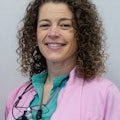 Jessica Atkinson, MEd, BSDH, RDH, FADHA
Jessica Atkinson, MEd, BSDH, RDH, FADHA
Jessica Atkinson, MEd, BSDH, RDH, FADHA, is a dental hygiene educator, clinician, and advocate dedicated to advancing the profession through innovation and education. She combines her clinical expertise and love for education to create engaging, practical learning experiences. Jessica is an Associate Professor and Senior Clinic Coordinator at Utah Tech University, co-host of A Tale of Two Hygienists, and CEO of HYGIENE edgeUCATORS, where she develops continuing education for educators and clinicians. She co-founded Hygiene Edge, a platform with over 100,000 YouTube subscribers. Recognized with the Element Award and Outstanding Service Award, she is a Fellow of the ADHA and past president of UDHA.
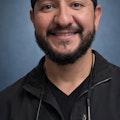 David Torres, CRDH
David Torres, CRDH
David Torres, CRDH, cohost of A Tale of Two Hygienists, is an experienced dental hygienist with over a decade of clinical expertise, specializing in patient education, preventive care, and the integration of modern dental technologies. Known for his passion for teaching, campus recruiting, and coaching, David is dedicated to elevating patient experiences while helping dental professionals improve efficiency, workflow, and long-term success.
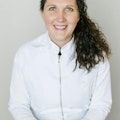 Shelley Brown, MEd, BSDH, RDH, FADHA
Shelley Brown, MEd, BSDH, RDH, FADHA
Shelley is a dental educator, speaker, content creator, and mobile clinician dedicated to advancing accessible and innovative dentistry. As co-owner of HYGIENE edgeUCATORS, she empowers dental educators through professional development. Since 2009, she has taught at the Utah College of Dental Hygiene and founded Homebound Smiles, a mobile dental practice serving underserved patients. She received the 2026 Sunstar World Dental Hygienist award for her work in public health. You can find her on social media as Shelley_The_Hygienist and at www.shelley.dental.